



Overbites (OB) and overjets (OJ) are common dental conditions, but they are often misunderstood. While many people use these terms interchangeably, they refer to distinct issues. Here’s what Masri Orthodontics, your trusted orthodontist in Livonia, wants you to know about each one and how they are treated.
What’s the Difference Between Overbite and Overjet?
-
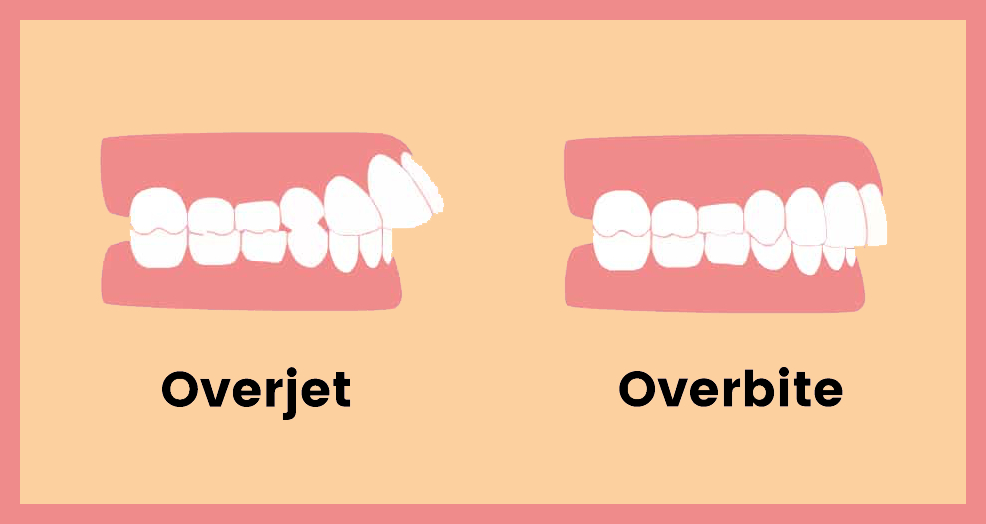
Overbite (OB):
An overbite refers to the vertical overlap of the upper teeth over the lower teeth. Ideally, this overlap should be about 30%. Anything beyond this is considered an excessive overbite.
-
Overjet (OJ):
An OJ refers to the horizontal distance the upper teeth sit in front of the lower teeth. This creates a “buck teeth” effect. This forward posture of the upper jaw is what most people mistakenly refer to as an OB.
| Overbite | Overjet | |
|---|---|---|
| Direction | Vertical: upper front teeth cover the lower front teeth | Horizontal: upper front teeth sit forward of the lower front teeth |
| Ideal range | About 30% overlap | Upper and lower front teeth close together, with no “buck teeth” look |
| Often called | Deep bite | “Buck teeth” (often mislabeled as an overbite) |
Read on to learn more from your trusted Northville orthodontist.
Treatment Options
The treatment for overbites and overjets depends on the severity of the condition and the patient’s age:
-
For Children:
- Mild Cases: Headgear can help correct an overjet during growth.
- Moderate Cases: The Herbst device can normalize jaw growth and reposition teeth, followed by braces and Class II elastics.
- Severe Cases: Jaw surgery may be necessary to achieve full correction.
-
For Adults:
- Mild Cases: Braces with elastics can often correct the issue.
- Moderate to Severe Cases: Tooth extractions or jaw surgery may be required, as adult bones are less malleable.
Why Early Treatment Matters
Addressing these conditions early, especially during childhood, can simplify treatment and improve outcomes. That is why the AAO recommends a first orthodontic evaluation by age 7, and why Dr. Masri offers early orthodontic treatment while the jaw is still growing. Adults may still achieve great results but often require more advanced techniques, and severe skeletal cases may call for surgical orthodontics.
Summing Up
It is crucial to understand the distinction between an overbite and an overjet because the appropriate treatment will depend upon the severity of the case and, most importantly, the age at which it occurred. Overjet cases are relatively more common as they can usually be treated within the first decade of life when children are generally still in an early stage. Adults may also require combined treatment with the use of braces, elastics, or surgery.
If you’re seeking a reliable orthodontist, schedule your complimentary consultation with Masri Orthodontics today and find out your options for better oral health.