

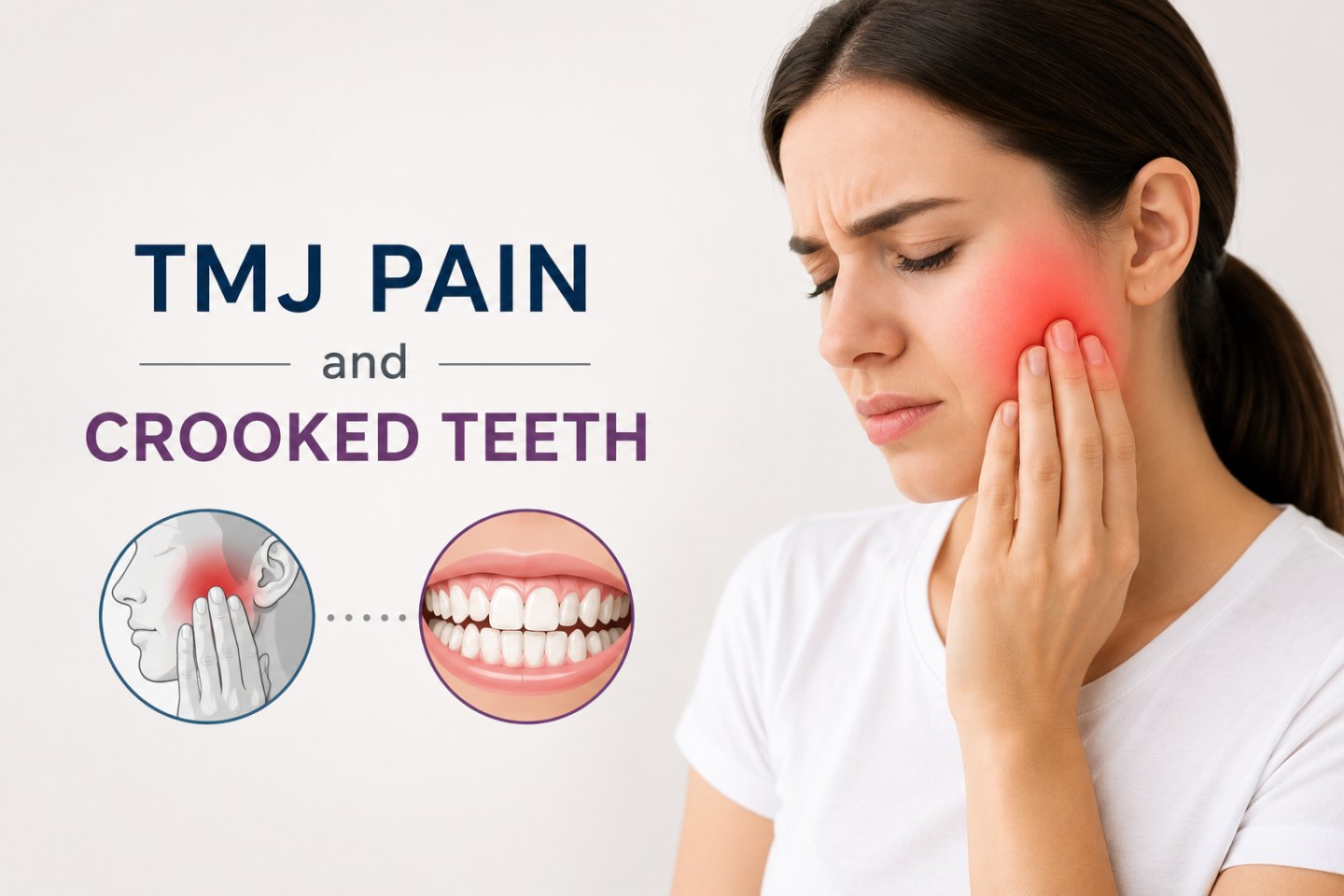
Most people treat TMJ pain as a jaw problem and crooked teeth as a cosmetic one. They are not wrong, but they are missing the bigger picture. These two conditions feed into each other in ways that most patients never get told about. When your teeth are not properly aligned, your jaw shifts to compensate. That shift, repeated thousands of times a day through chewing, talking, and swallowing, wears down the temporomandibular joint until pain becomes your new normal. Treating crooked teeth with braces or the right orthodontic option often fixes the alignment and, with it, the pain.
What Is TMJ and Why Does It Hurt?
The temporomandibular joint sits on both sides of your face, right where your jawbone meets your skull. It handles every jaw movement you make, from chewing a meal to yawning on a Monday morning. When this joint gets inflamed or overloaded, the result is temporomandibular disorder, which most people just call TMJ or TMD.
Symptoms can include:
- Jaw pain or soreness, especially after waking up
- Clicking or popping when you open your mouth
- Headaches near the temples that keep coming back
- Neck and shoulder tension that never fully goes away
- Trouble opening or closing your mouth all the way
A lot of patients spend years chasing these symptoms with pain relievers and heat packs. The symptoms ease, then return. That cycle usually continues until someone looks at the bite.
How Crooked Teeth Put Stress on Your Jaw
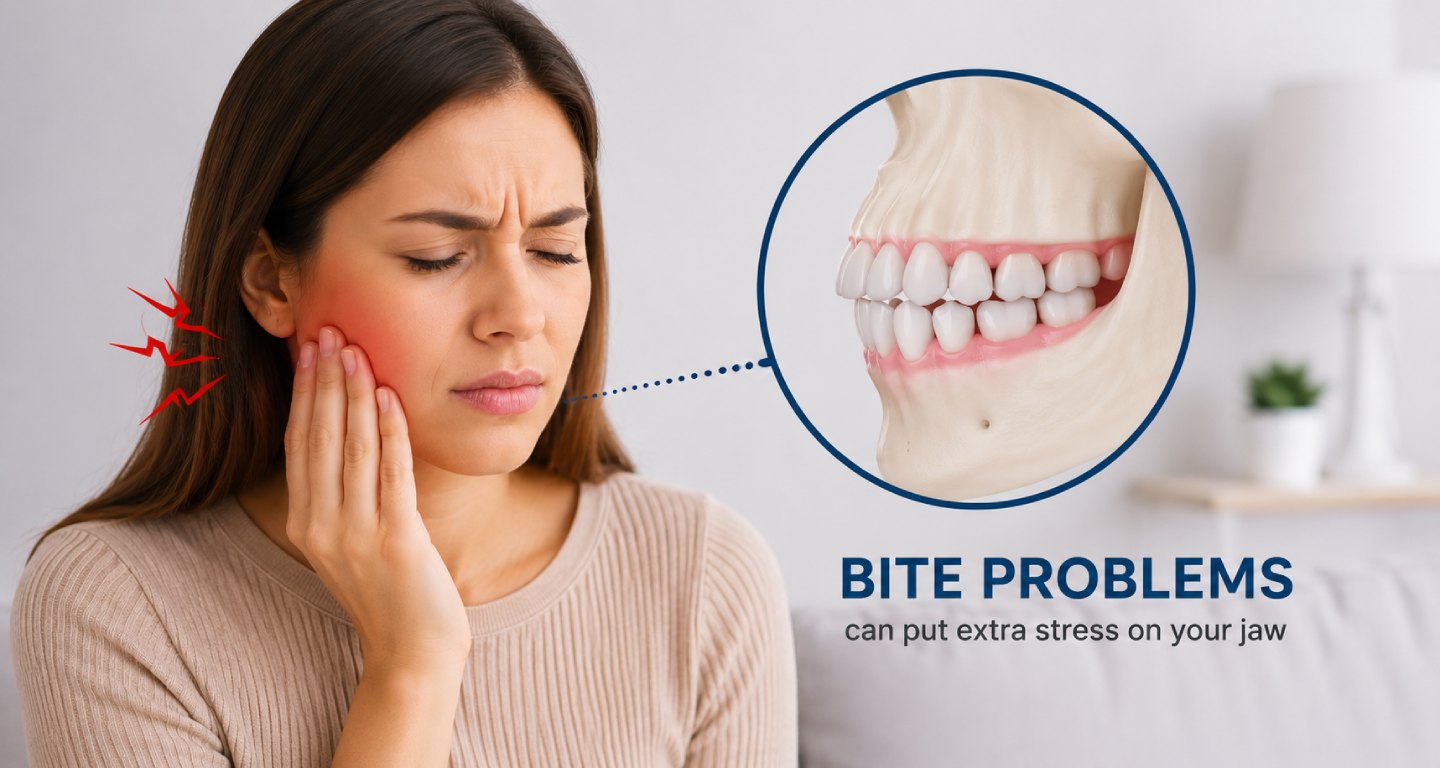
Crooked teeth affect far more than your smile. They change how your upper and lower teeth meet when you bite down. That meeting point is called your occlusion, and when it is uneven, your jaw muscles and joint absorb all the extra pressure.
Picture a table with one short leg. The table still stands, but it wobbles, and the stress concentrates on certain joints rather than spreading evenly. Your jaw works the same way. When teeth are out of alignment, your jaw shifts to find a stable resting position. That shift loads the TMJ unevenly, and over months and years, the joint breaks down.
Overbites, underbites, crossbites, and open bites all create this kind of uneven load. None of them is just cosmetic. They are mechanical problems that your jaw lives with every single day.
How Orthodontic Treatment Helps
Straightening your teeth restores balance to your bite, and less imbalance means less strain on the jaw joint. Patients with both bite concerns and jaw pain regularly find that treating alignment brings real relief to their TMJ symptoms. Crooked teeth with braces treatment applies steady pressure over months to move teeth into correct positions, levelling the bite so the jaw no longer compensates. For patients in the area, braces in Livonia treatment is built around each patient’s actual bite pattern, not just the appearance of the smile.
Invisalign works through clear aligners that swap out every one to two weeks, progressively correcting the bite in small, controlled steps. Adults prefer this route because the aligners stay nearly invisible and come out for meals. Invisalign handles many of the same bite problems as traditional braces, and when it corrects the occlusion, jaw strain tends to reduce along with it. Masri Orthodontics builds each treatment plan around the patient’s bite mechanics and jaw symptoms, not just cosmetic goals.
Signs Your TMJ Pain May Be Bite-Related
Not every case of TMJ pain traces back to misalignment, but certain patterns point clearly in that direction:
| Sign | What It May Indicate |
| Pain that gets worse after meals | Bite imbalance under chewing load |
| Teeth grinding at night | Jaw searching for a stable resting position |
| Uneven wear on certain teeth | Upper and lower teeth not meeting properly |
| Jaw fatigue after long conversations | Muscles are working harder than they should |
More than one of these signs at the same time is worth taking seriously. A bite evaluation gives you actual information rather than guesswork.
What to Do Next
If jaw pain has followed you around for a while and nobody has looked at your bite, that is the right starting point. An orthodontist can map out exactly how your upper and lower teeth meet and identify whether misalignment drives your discomfort. Treatment varies based on bite severity, age, and what the patient’s daily life looks like. Whether the answer turns out to be braces, Invisalign, or a different approach, the goal stays the same: restore proper alignment and take the chronic load off the jaw.
Conclusion
TMJ pain and crooked teeth do not just happen to show up together. One often causes the other. When the bite is off, the jaw absorbs the consequences, and those consequences tend to build over time. Treating crooked teeth with braces or other orthodontic options targets the actual source of the problem rather than managing symptoms indefinitely. If jaw pain has become a regular part of your life, your bite deserves a serious look.
Frequently Asked Questions
Can fixing my teeth actually reduce TMJ pain?
Yes, correcting bite misalignment takes pressure off the jaw joint, and many patients notice a real reduction in TMJ symptoms as treatment progresses.
How long does orthodontic treatment take for bite correction?
Most cases land somewhere between 12 and 24 months, depending on how significant the misalignment turns out to be.
Does Invisalign work for bite problems linked to TMJ?
It does for many bite types. Your orthodontist will confirm whether your specific bite pattern responds well to clear aligner treatment.
What is the difference between TMJ and TMD?
TMJ refers to the joint itself, while TMD describes the disorder affecting it, but most people and clinicians use both terms interchangeably.
Does Masri Orthodontics treat patients dealing with both TMJ symptoms and bite concerns?
Yes, Masri Orthodontics evaluates both the functional and cosmetic side of your bite, so jaw-related symptoms factor directly into the treatment plan.